Preparing for a government examination is difficult when study is your only responsibility. What happens when you return to books after spending more than two decades in an entirely different profession, have family responsibilities, and still need to sit for hours revising subjects you have not studied for years?
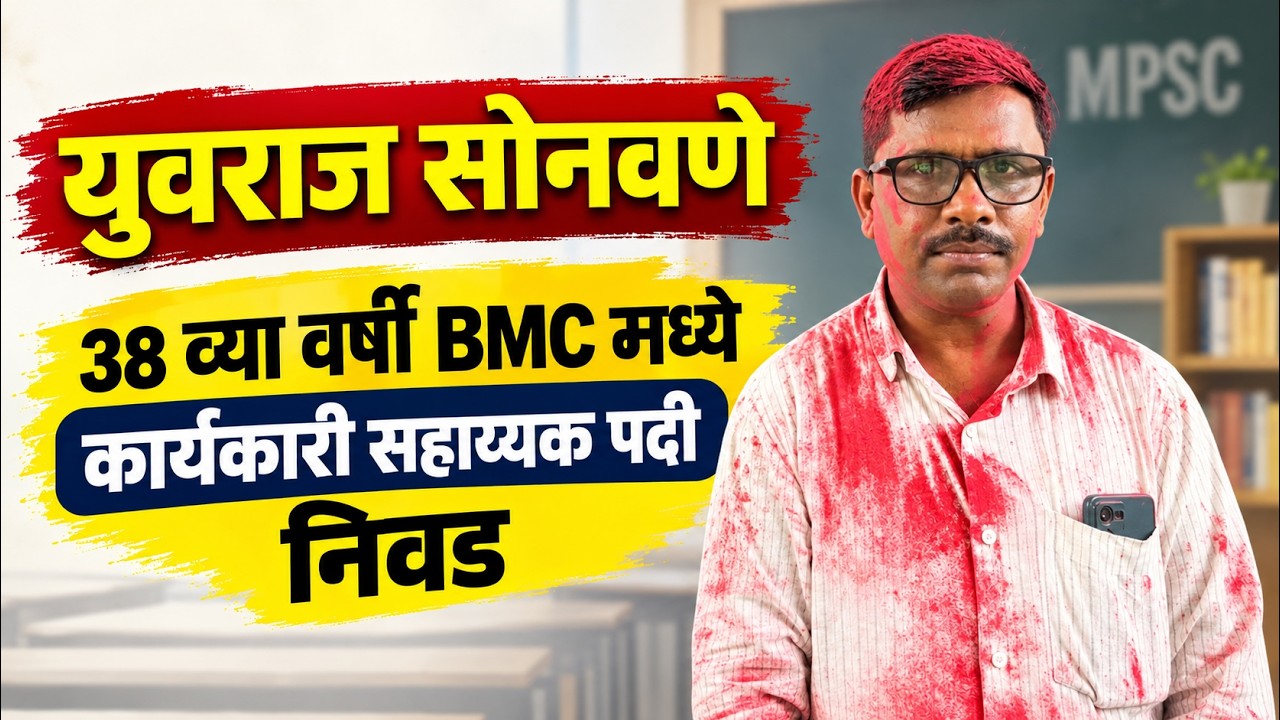
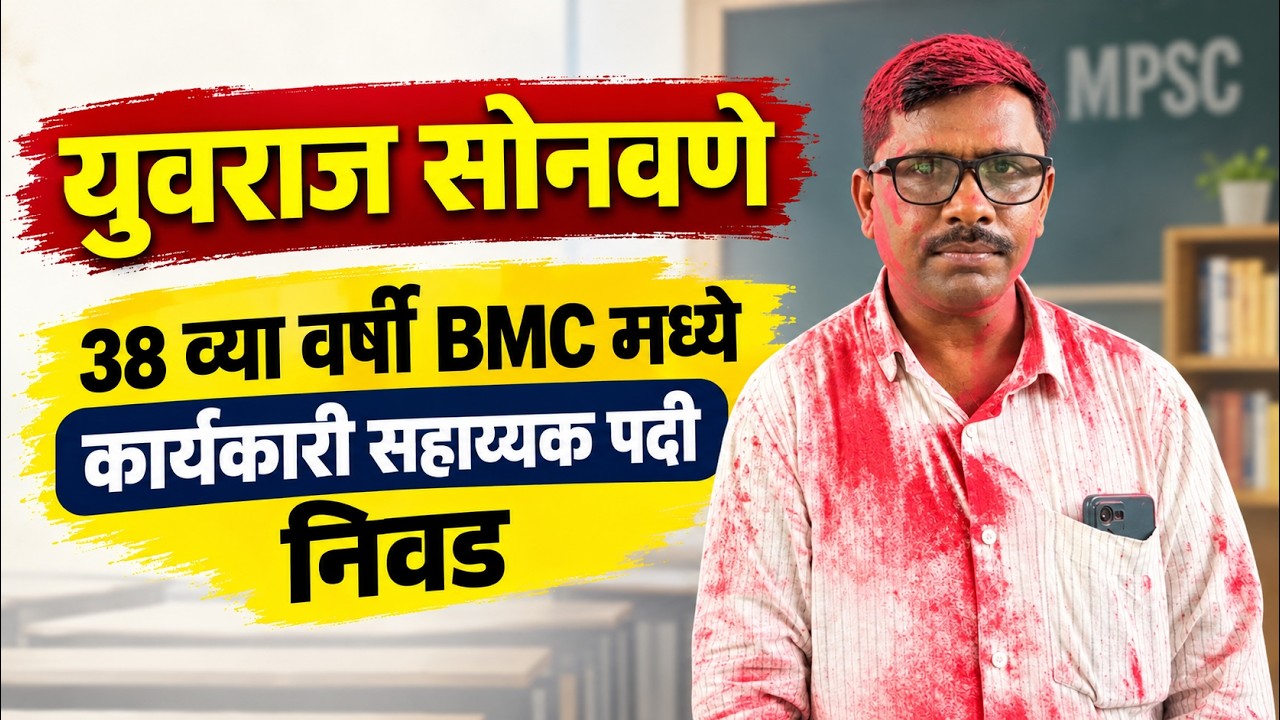
That is what makes Yuvraj Eknath Sonawane’s journey useful for competitive-exam aspirants.
In the video shared by Karmayogi Academy, Sonawane introduces himself as an ex-Army serviceman who completed 24 years of service before retirement. He explains that he joined the Army after Class 12 and later began the next phase of his journey through competitive-exam preparation.
The video celebrates his selection for the Executive Assistant post in Brihanmumbai Municipal Corporation (BMC). This is also independently supported by BMC’s official provisional selection list, where YUVARAJ EKNATH SONAWANE appears in the Executive Assistant Direct Recruitment 2024 process.
For MPSC aspirants, however, the greatest value of his story is not simply the result. It is the way he approached revision, previous-year questions, difficult subjects, consistency and mentorship.
According to the video, Yuvraj Sonawane joined Karmayogi Academy on 12 July 2025 under an initiative called the Sagar Yojana. The academy describes him as the first student associated with that initiative.
The video’s host also describes him as being roughly in the 38–40 age range during this phase of preparation. What stands out is the routine described in the discussion: after taking his daughter to class, he would use the period from around 10 a.m. to 3 p.m. for focused library study, before returning to his family responsibilities.
That detail matters.
Many aspirants assume successful preparation requires an ideal schedule—eight or ten uninterrupted hours, no responsibilities and complete freedom from distractions. Sonawane’s experience suggests something more practical: work with the hours you genuinely have and protect them carefully.
The BMC provisional selection document identifies this as Executive Assistant Direct Recruitment 2024 and states that its examination was conducted on dates in December 2024.
Since Sonawane says he joined Karmayogi Academy in July 2025, his BMC examination attempt predates that admission. Therefore, it would be inaccurate to present the BMC result as a selection achieved solely because of subsequent academy coaching.
What the video does document clearly is that Sonawane continued studying at Karmayogi Academy and shared preparation methods that are highly relevant to MPSC and other Maharashtra government examination aspirants.
Returning to academic preparation after a long career can be intimidating.
Sonawane says that after Class 12, he entered the Army and served for approximately 24 years. By the time he returned to competitive-exam study, he had therefore spent roughly two-and-a-half decades away from conventional academic preparation.
He openly acknowledges this difficulty.
His professional field had been completely different from the type of study required for competitive examinations. Rather than treating that gap as a reason to stop, he emphasises one principle repeatedly: continuity.
For students preparing for MPSC, PSI, STI, ASO, Group B or Group C examinations, that principle is worth remembering. Your academic background may influence where you begin, but your daily study system determines whether the preparation keeps moving.
Sonawane explains that he had been away from this style of academic study for around 24–25 years.
That creates challenges younger aspirants may underestimate: rebuilding reading stamina, remembering factual material, adapting to objective-question patterns and developing the habit of sitting with the same subject for extended periods.
His response was not to search for shortcuts. It was to build consistency.
The video describes a routine where family duties continued alongside preparation. Instead of waiting for a completely free day, he converted the available window between responsibilities into library time.
This is an important lesson for working professionals, married candidates and older aspirants: a five-hour protected study window can be more valuable than an imaginary ten-hour timetable that is never followed.
Sonawane says History and Geography were comparatively easier for him, partly because of his prior knowledge and his experiences travelling through different regions during military service.
Economics was different.
He describes Economics as difficult because of its factual material and says guidance helped him identify areas where factual memorisation was unavoidable.
That is a more useful mindset than repeatedly saying, “This subject is weak.”
A weak subject should be broken into two questions: What part requires conceptual understanding? What part requires repeated recall? Once that distinction becomes clear, study becomes manageable.
One of his clearest recommendations is remarkably simple: after attending a lecture, read that topic again independently.
He specifically advises students not to treat the classroom lecture as the end of preparation. Instead, revisit what was taught and consolidate it through self-study.
A useful cycle is: Learn → Read → Recall → Practise → Revise.
The first exposure gives familiarity. Revision creates retention.
This is arguably the strongest tactical insight in the entire interview.
Sonawane recommends checking PYQs related to the topic immediately after revision. But he goes further: he says students should also analyse the options given in previous-year multiple-choice questions.
Why is this useful?
Suppose an MPSC question contains four historical organisations as options and asks which one was founded first. Even if only one option is the correct answer, the remaining three organisations may later become the basis of independent questions.
So instead of learning one correct answer, analyse:
That converts one PYQ into several revision points.
Randomly solving hundreds of questions can feel productive without revealing actual weaknesses.
A better approach, consistent with Sonawane’s advice, is: Today’s topic → revision → topic-wise PYQs → option analysis → short notes.
For example, after completing Fundamental Rights in Polity, solve PYQs specifically related to Fundamental Rights before moving away from the chapter.
This immediately tells you whether you merely understood the lecture or can actually recognise exam-level traps.
Sonawane repeatedly highlights access to teachers and says students should ask whatever question is in their mind rather than carrying the doubt forward.
Competitive examinations are cumulative. A small conceptual gap today can make a later chapter unnecessarily difficult.
A student who asks ten genuine questions may progress faster than someone who silently rereads the same confusing paragraph ten times.
Every chapter cannot receive unlimited time.
Sonawane explains that faculty guidance helped him understand which topics deserved deeper attention instead of trying to study everything with exactly the same intensity.
This does not mean predicting questions with certainty. No teacher can legitimately guarantee what will appear in a future MPSC paper.
The useful role of mentorship is different: helping students interpret the syllabus, recognise recurring PYQ themes and allocate limited study time intelligently.
Competitive-exam preparation often swings between two extremes: memorising everything or insisting that everything must be understood conceptually.
Neither works.
Sonawane’s Economics example illustrates this well. Some information can be understood logically; certain factual data simply requires repeated revision and recall.
Successful preparation needs both.
His Army postings made some Geography concepts easier because he had physically experienced different regions and landscapes.
Students can reproduce the same principle without travelling across India.
Connect information with maps, timelines, diagrams, Maharashtra districts, current events, locations you know and real-life examples.
Information linked to context is generally easier to recall than an isolated sentence.
Five focused hours containing revision, recall and question analysis can produce more progress than ten distracted hours interrupted by social media.
The interview repeatedly mentions guidance from Amol Sir and Aadesh Sir. Sonawane particularly values being able to ask doubts and receive direction about how to approach different topics.
This highlights what aspirants should actually look for when evaluating MPSC coaching in Nashik.
Good guidance should help you understand the syllabus, identify important areas through PYQs, resolve conceptual doubts, build a revision system and evaluate preparation through tests.
Students considering MPSC classes in Nashik should therefore evaluate teaching quality and academic support rather than choosing solely on advertising claims.
At Karmayogi Academy, Nashik, the mentoring relationship shown in this video is useful precisely because Sonawane discusses concrete study problems—Polity doubts, difficulty with Economics, topic selection and revision—rather than offering only motivational statements.
The following plan is general educational guidance derived from the study principles discussed in the video, not a timetable stated by Sonawane.
Step 1: Attend the lecture or learn the concept.
Step 2: Read the same topic independently.
Step 3: Close the material and recall the main points without looking.
Step 4: Solve topic-wise previous-year questions.
Step 5: Analyse every option—not only the correct answer.
Step 6: Add mistakes and unfamiliar facts to short revision notes.
Step 7: Revisit them during weekly revision.
Once a week, dedicate one session specifically to questions from previously completed topics. This prevents the common situation where students continuously finish new chapters while forgetting the old ones.
For current affairs, connect news to static syllabus areas instead of collecting endless PDFs. For example, an RBI-related development should trigger revision of the relevant Economy concepts.
Mock tests should then be used to measure whether this entire system is working.
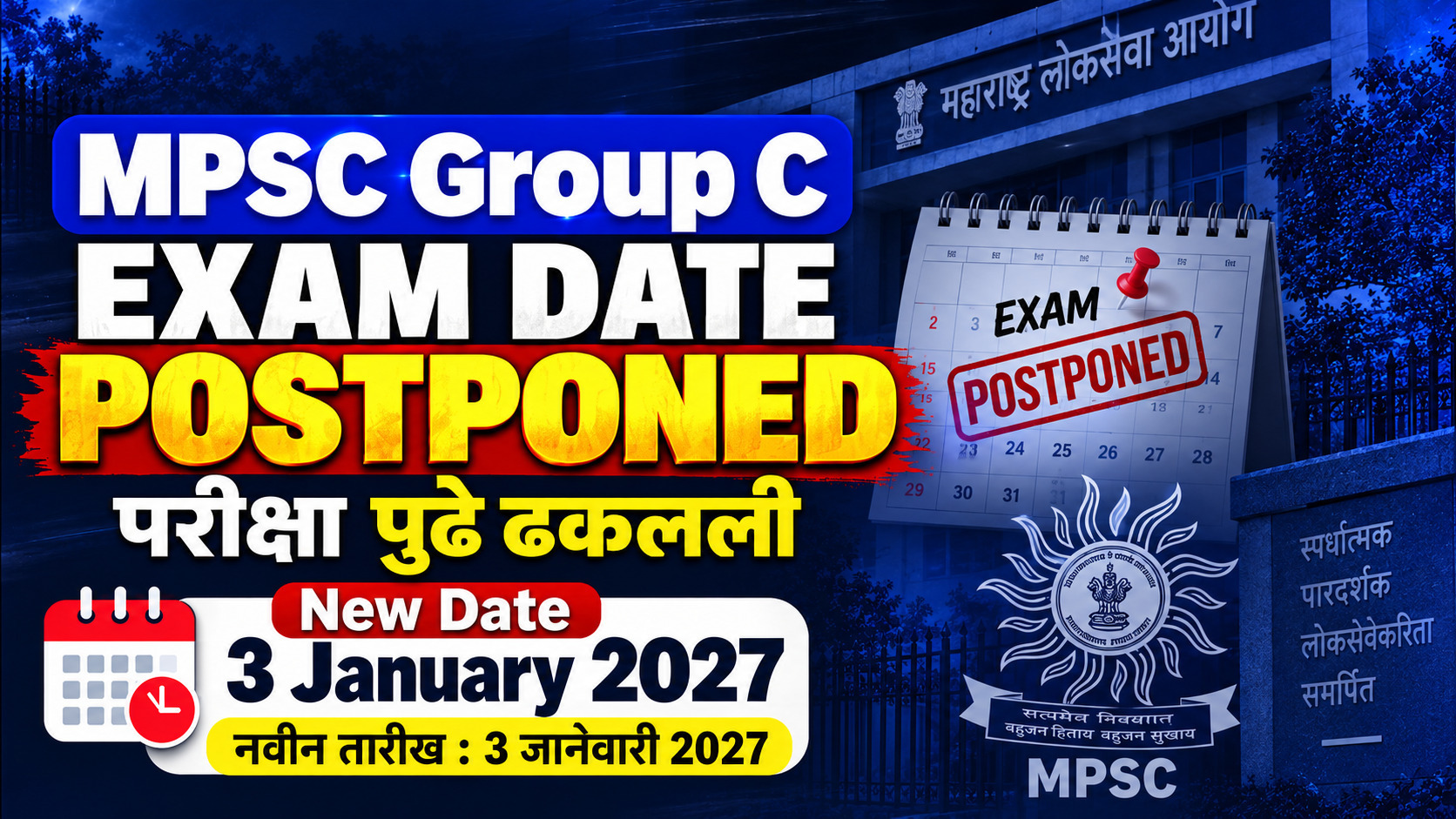
Near the end of the discussion, Sonawane talks about postponed examinations and encourages students to treat additional time constructively instead of repeatedly worrying about what will happen next.
That is practical advice.
When an examination schedule changes, candidates cannot control the administrative decision. They can control what happens to the extra days.
Use them for revision, PYQs, weak subjects, full-length tests and error correction.
However, always check the latest date through the official recruiting authority. Do not rely solely on coaching posts, WhatsApp forwards or old screenshots.
Yuvraj Sonawane’s journey is valuable because it challenges one of the most damaging beliefs in competitive-exam preparation: that you must have perfect circumstances before you can succeed.
After 24 years of Army service, he returned to serious study. He balanced responsibilities, spent available hours in the library, revised lectures, analysed previous-year questions and continued asking teachers for guidance.
His BMC selection is one milestone. The broader lesson for an MPSC aspirant is the process behind continued preparation: study the topic, revise it, analyse PYQs deeply, correct weaknesses and repeat the cycle consistently.
Motivation may begin the preparation. A repeatable system is what keeps it alive.
Students preparing for MPSC, PSI, STI, ASO, Rajyaseva, Group B or Group C examinations can explore the courses, guidance, test series and upcoming batches available at Karmayogi Academy, Nashik.