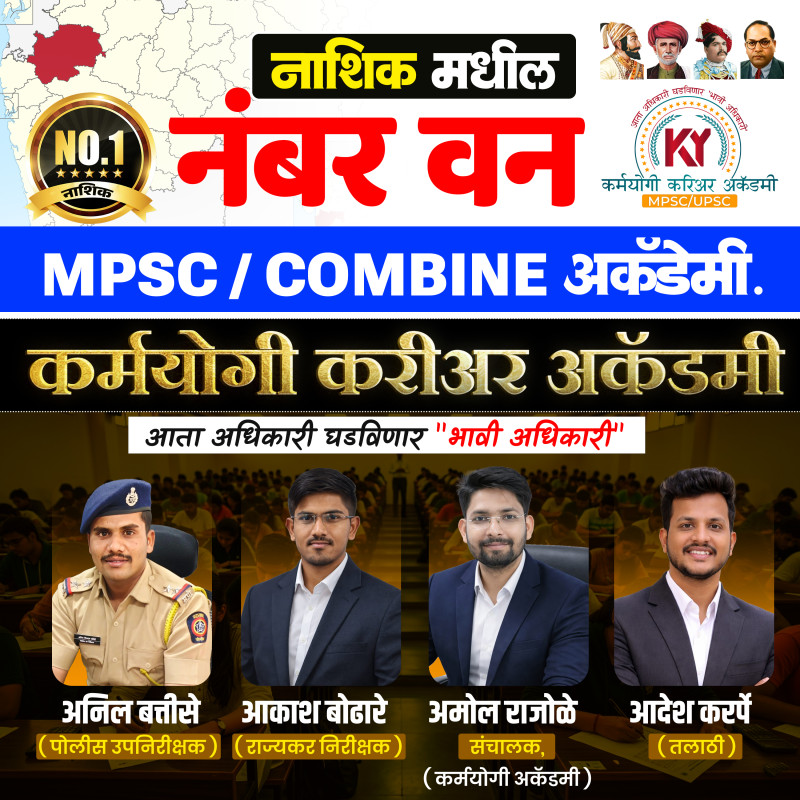
PSI · STI · ASO · SR · Tax Assistant · Industry Inspector | Prelims + Mains | Marathi Medium | Nashik's Most Trusted Coaching
The MPSC Combine recruits for both Group B and Group C posts in a single combined examination. Group B covers Assistant Section Officer (ASO), State Tax Inspector (STI), and Police Sub-Inspector (PSI). Group C covers Tax Assistant, Industry Inspector, Clerk Typist, and related posts.
Both groups share a common Prelims paper. The Mains papers differ by post. This means one round of preparation opens multiple job opportunities simultaneously — but only if your preparation covers the right territory.
This batch is for aspirants who are serious about clearing both stages, not just the Prelims cutoff. If you want to prepare once and compete across as many posts as possible, this is where you start.
1. Aadesh Karpe Sir — Teaching from Inside the System
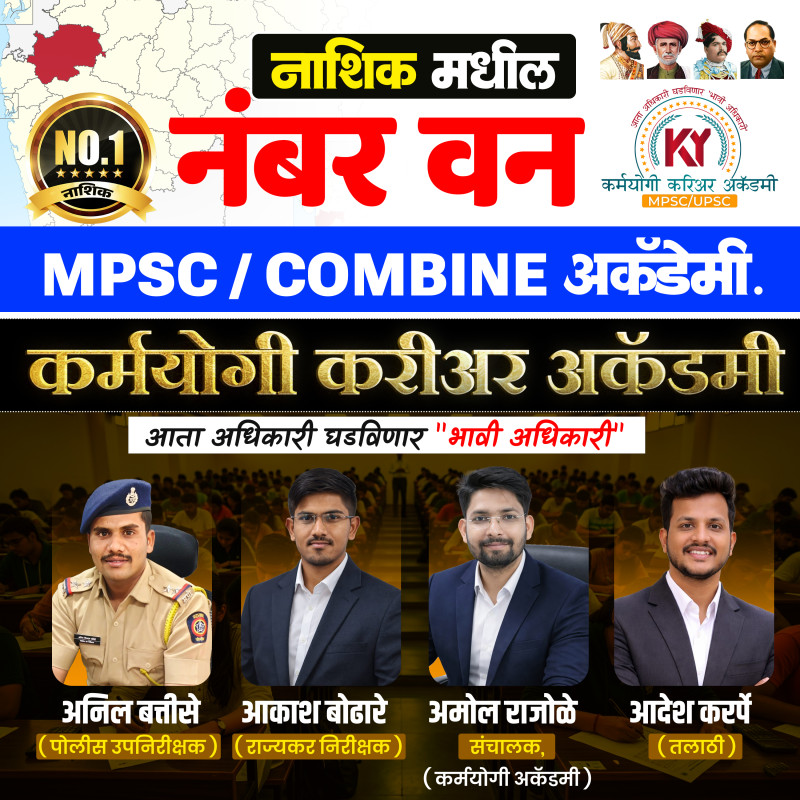
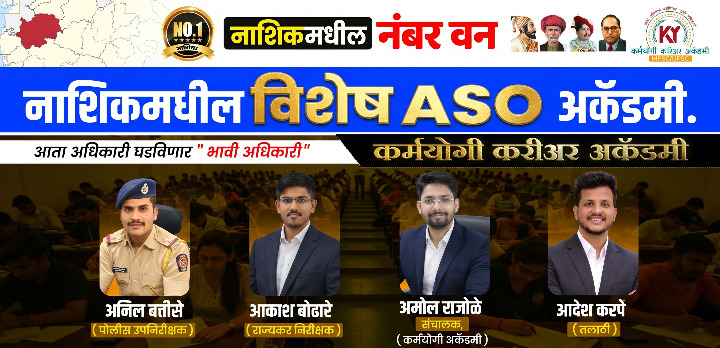
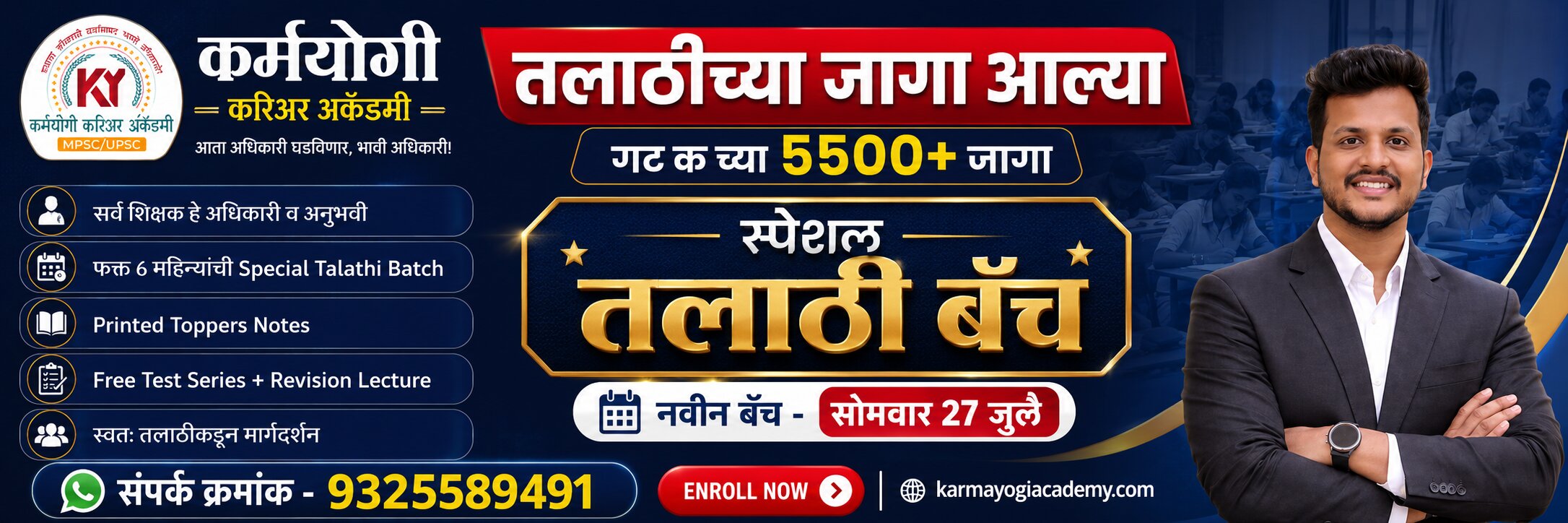
Aadesh Karpe Sir is a serving Gram Mahasul Adhikari — which means he cleared the MPSC Combine himself, went through selection, joined the Maharashtra government, and now teaches. He knows which topics MPSC actually weighs in the paper versus which ones textbooks overemphasize. He knows what an answer looks like when a Mains examiner sees hundreds of scripts. That's not something you can get from someone who has only read the syllabus.
2. Post-2019 Exam Pattern — The Question Style Has Changed
Since 2019, the MPSC Combine Prelims has moved away from direct recall questions toward multi-statement questions that test whether you understand the logic behind a fact, not just the fact itself. Most coaching material in Maharashtra hasn't caught up to this shift. Our preparation addresses the post-2019 pattern from day one, so you don't spend months preparing for an exam that no longer exists.
3. Group B and Group C Covered Together, Intelligently
The Prelims paper is identical for Group B and Group C. The Mains Paper 1 (General Studies + Language) is nearly identical. Only Mains Paper 2 differs by post. We build a common base for Prelims and Paper 1, then split into post-specific tracks for Paper 2. You don't pay for two separate courses; you get a structured path through both.
4. Weekly Tests That Match the Actual Paper Format
Every Saturday, students sit a timed test structured like the actual Prelims paper: 100 questions, 60 minutes, Maharashtra-weighted GK. This isn't supplementary practice. It's the primary accountability system. Over 52 weeks, you'll have completed over 40 full-length practice rounds before the exam date.
5. Deepika Mahale's Result — What Focused Preparation Produces
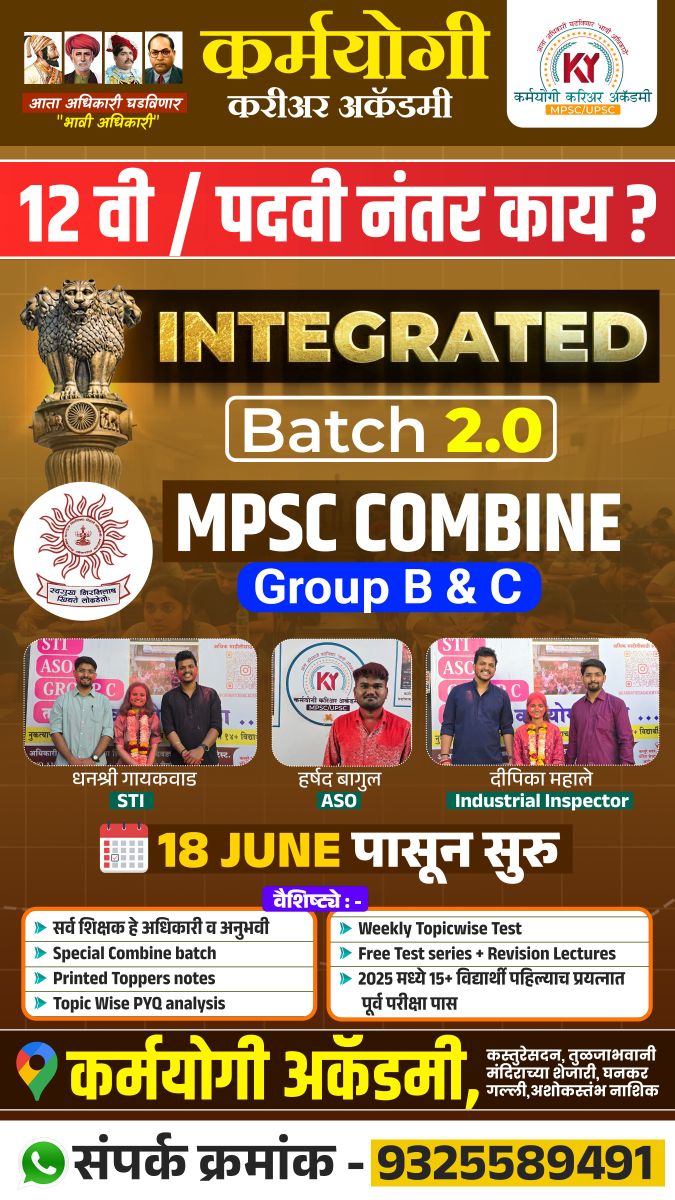
Deepika Mahale studied from Karmayogi Academy and became Nashik's first female Industry Inspector (ST Category, Rank 1, Maharashtra). Her result came from consistent test performance and a targeted cutoff strategy: she aimed for 60 marks in the Prelims, secured 50+, against a Group C cutoff of 35. The margin matters. We prepare you to clear the cutoff with room to spare, not to scrape through.
|
Feature |
Detail |
|
Duration |
52 Weeks |
|
Mode |
Offline — Panchavati, Nashik |
|
Target Posts (Group B) |
PSI, STI, ASO |
|
Target Posts (Group C) |
Tax Assistant, Industry Inspector, Clerk Typist, SR |
|
Language |
Marathi Medium (English terminology where needed) |
|
Study Material |
Included — Maharashtra-specific, updated annually |
|
Weekly Tests |
Every Saturday — full Prelims format |
|
Batch Size |
Limited — for individual attention |
|
Contact |
+91 86685 78908 |
Knowing the structure is the first step to not wasting time on the wrong things.
Prelims — Common for Group B and Group C
|
Component |
Details |
|
Questions |
100 objective-type (MCQ) |
|
Total Marks |
100 |
|
Duration |
60 minutes |
|
Coverage |
General Studies + General Aptitude |
|
Negative Marking |
Yes — 1/4 mark deducted per wrong answer |
|
Purpose |
Shortlisting only; marks not counted in final merit |
Mains — Paper 1 (Common Across Posts)
|
Paper 1 Component |
Details |
|
Marathi Language |
50 marks |
|
English Language |
50 marks |
|
General Studies |
100 marks |
|
Duration |
60 minutes per paper |
Mains — Paper 2 (Post-Specific)
Paper 2 differs by post. PSI Paper 2 covers Law, Reasoning, and Physical Sciences. STI Paper 2 covers Revenue Law and Economic Geography. ASO Paper 2 covers Administration, Law, and Reasoning. Tax Assistant and Clerk Typist have their own Paper 2 syllabi. We prepare you for your target post's Paper 2 in dedicated tracks.
Prelims Syllabus
Mains Paper 1 — Language and General Studies
Mains Paper 2 — Post-Specific (Covered in Dedicated Tracks)
Weeks 1–14: Conceptual Foundation
History, Polity, and Geography — these three subjects account for roughly 35–40 questions in the Prelims. We build these from scratch with Maharashtra-weighted content. Every topic is tied to PYQ (Previous Year Question) patterns so you understand how MPSC frames questions, not just what the syllabus says.
Weeks 15–28: Economics, Science, and Environment
Economics and General Science are where aspirants lose the most marks to rote memorization. We teach the underlying logic: why the Repo Rate affects inflation, what a buffer stock is and why the Maharashtra government uses one, how Maharashtra's irrigation policy has changed over the last decade. You'll answer application-based questions reliably, not just the straightforward ones.
Weeks 29–42: Current Affairs, Aptitude, and Language
Current Affairs for MPSC is not general current affairs. The Commission gives special weight to Maharashtra government decisions, state budget provisions, new schemes, appointments, and census data. We maintain a running document of Maharashtra-specific GK updated monthly. Aptitude classes in this phase bring each student to the 85-second-per-question pace the Prelims requires.
Weeks 43–52: Full-Paper Simulation and Error Diagnosis
The final 10 weeks are calibration, not revision. You'll sit 8 full Prelims simulations under exact time conditions. After each test, we go through wrong answers not to mark them, but to identify the type of error: did you misread the question? Did you know the answer but choose a trap option? Did time pressure cause a late-paper drop? Each error type needs a different fix. By week 52, you'll know your specific pattern of failure and have already practiced around it.
Aadesh Karpe Sir — Polity, History, Administration
Serving Gram Mahasul Adhikari. Cleared the MPSC Combine himself. Teaches with the perspective of someone who has worked inside Maharashtra's revenue administration — which gives him an unusually clear view of what MPSC actually tests for the administrative posts. He teaches Polity not as a list of articles but as a working system, which is why his students perform consistently on the multi-statement questions that most coaches don't prepare for.
Amol Sir — Economics and General Aptitude
MPSC Rajyaseva cleared. Teaches Economics with an emphasis on the Maharashtra-specific content that appears in every Combine paper: state budget provisions, irrigation schemes, cooperative banking, and district-level economic geography. Aptitude classes focus on identifying each student's speed bottleneck and fixing it, not on teaching shortcuts that don't work under exam conditions.
Harshad Bagul — ASO, Rank 1, ST Category. Scored 72 marks in the MPSC Prelims.
Deepika Mahale — Industry Inspector, Rank 1 in Maharashtra, ST Category. Nashik's first female Industry Inspector. Cleared Group C Mains while also competing for Group B posts.
Students across PSI, STI, ASO, and Industry Inspector posts have cleared the Combine from Karmayogi Academy in recent exam cycles.
Can I prepare for both Group B and Group C in the same batch?
Yes. The Prelims preparation is identical. Mains Paper 1 is nearly identical. Only Paper 2 differs. We run post-specific Paper 2 tracks alongside the common preparation. Most students cover 2–3 posts within a single course.
What is the difference between MPSC Combine and Rajyaseva?
Rajyaseva (State Services Exam) recruits for Class A gazetted posts: Deputy Collector, DSP, Tahsildar, and similar. MPSC Combine recruits for Class B non-gazetted posts (PSI, STI, ASO) and Class C posts (Tax Assistant, Clerk, Industry Inspector). Different papers, different syllabus depth, different competition. The Combine is the more accessible entry point, and many aspirants use it to secure a government job while continuing Rajyaseva preparation.
How many vacancies does the MPSC Combine release?
Vacancy counts vary by year. The 2024 cycle released 1,813 vacancies across Group B and Group C posts. Group B 2026 has released 552 posts (STI, ASO, PSI). Group C 2026 has released 938 vacancies (Industry Inspector, Tax Assistant, Bailiff, Clerk Typist). Combined, the Combine consistently offers over 1,000 government posts per cycle.
Is the coaching in Marathi?
Yes. All instruction is in Marathi. English terminology is explained in English where the syllabus uses English terms (particularly in Law and Economics). Study material is in Marathi.
What is the eligibility to apply for MPSC Combine?
Candidates must hold a graduation degree from a recognized university. Age limit is 18 to 38 years (with standard relaxations for reserved categories under Maharashtra government norms). Specific eligibility conditions vary by post; check the official MPSC notification for the post you're targeting.
Karmayogi Academy — Nashik
Phone / WhatsApp: +91 86685 78908
Website: karmayogiacademy.com
Address: Panchavati, Nashik, Maharashtra
Batch seats are limited. Aspirants preparing for the 2026 and 2027 Combine cycles should inquire early.